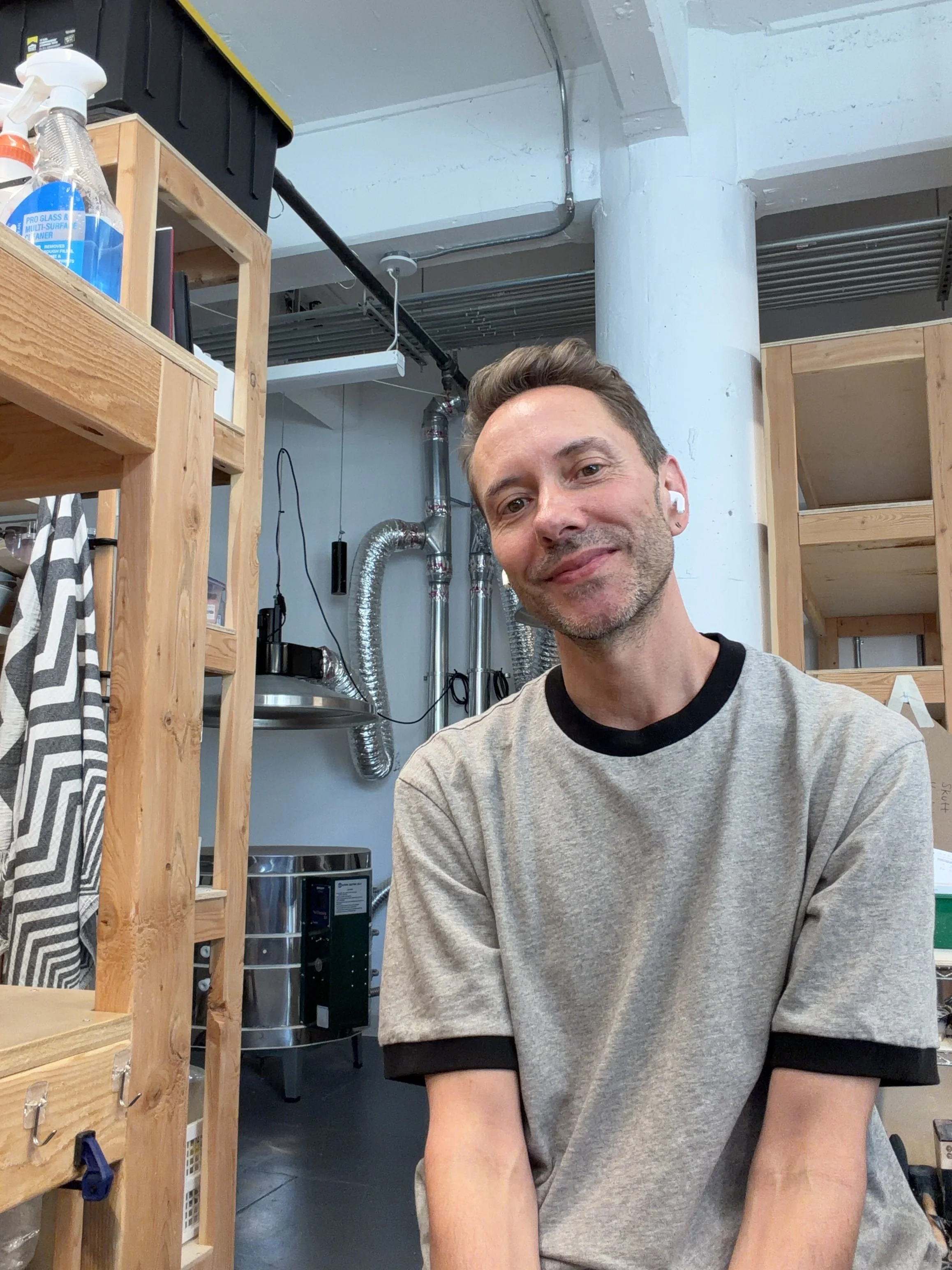
thanks for checking out my work
I live & work in NYC. My studio is located at Brooklyn Army Terminal.
Anderson Ranch!!!
I will be participating in AR’s 3 year Ceramic mentorship beginning August 2026. Excited to work with and be in the company of artists and artisans.
Happy to announce my solo show at Wagner College on Staten Island.
Heavy Load - April 24 - May 28
Opening, Sunday, May 3, 1pm - 3pm
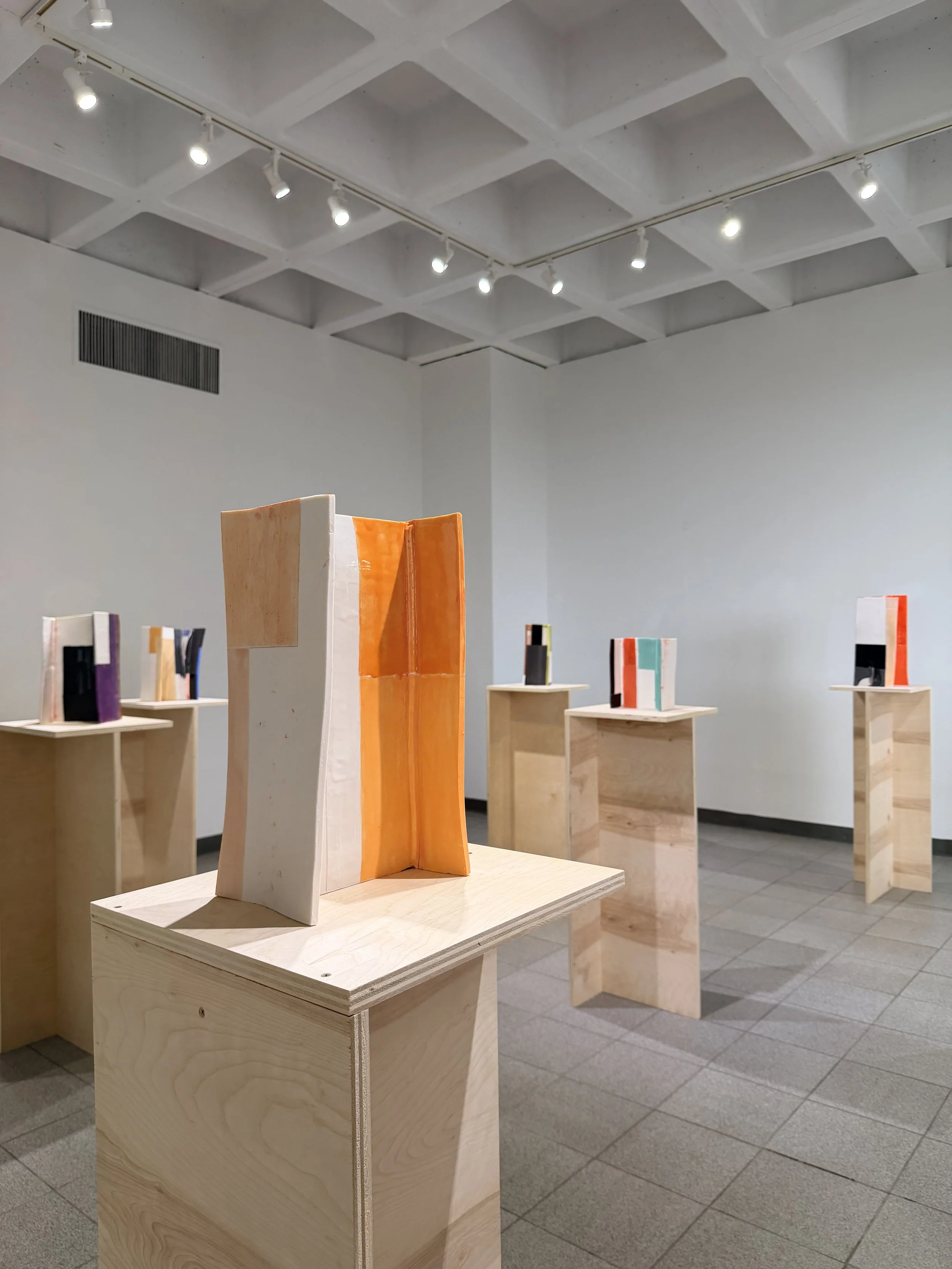
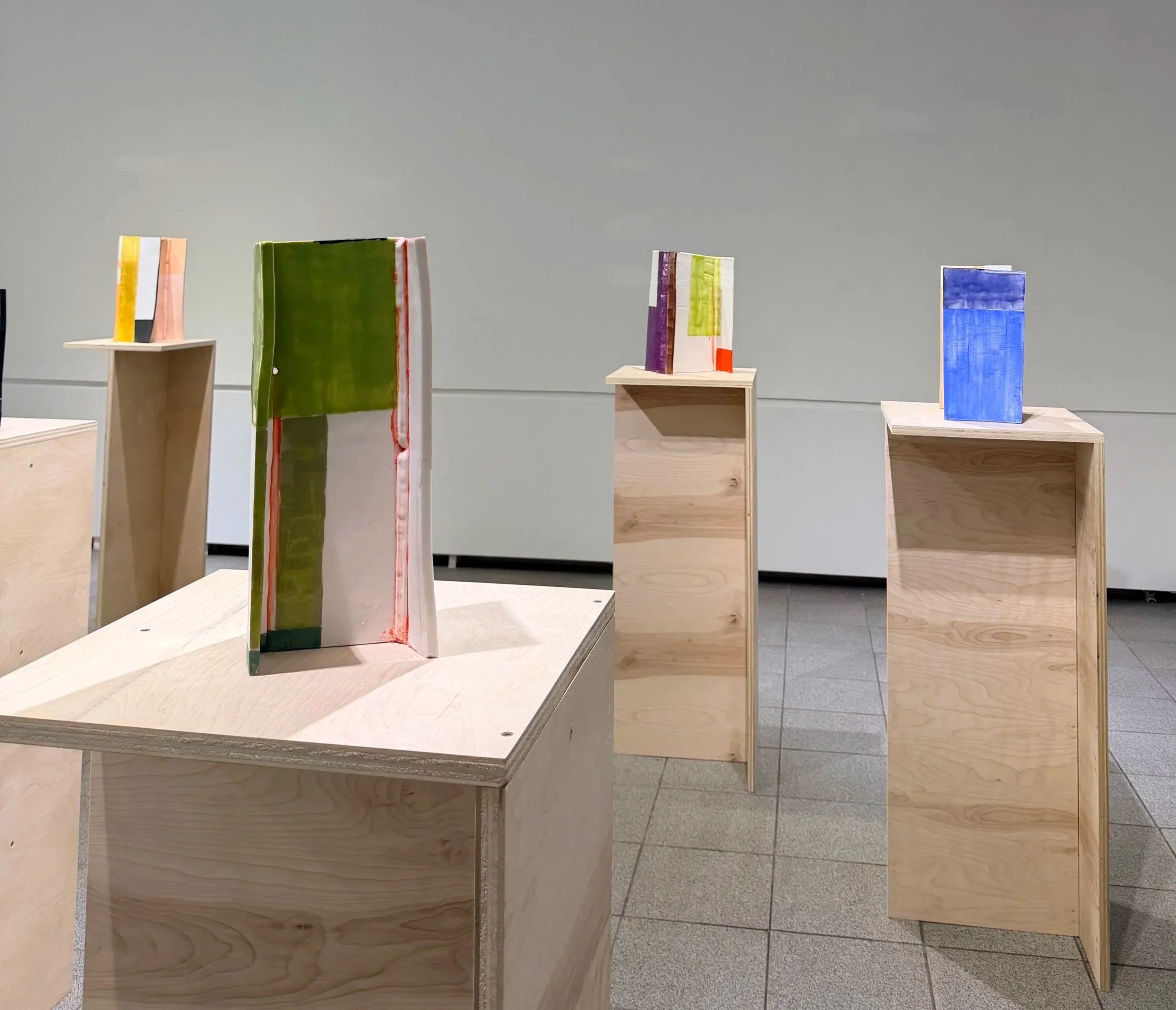
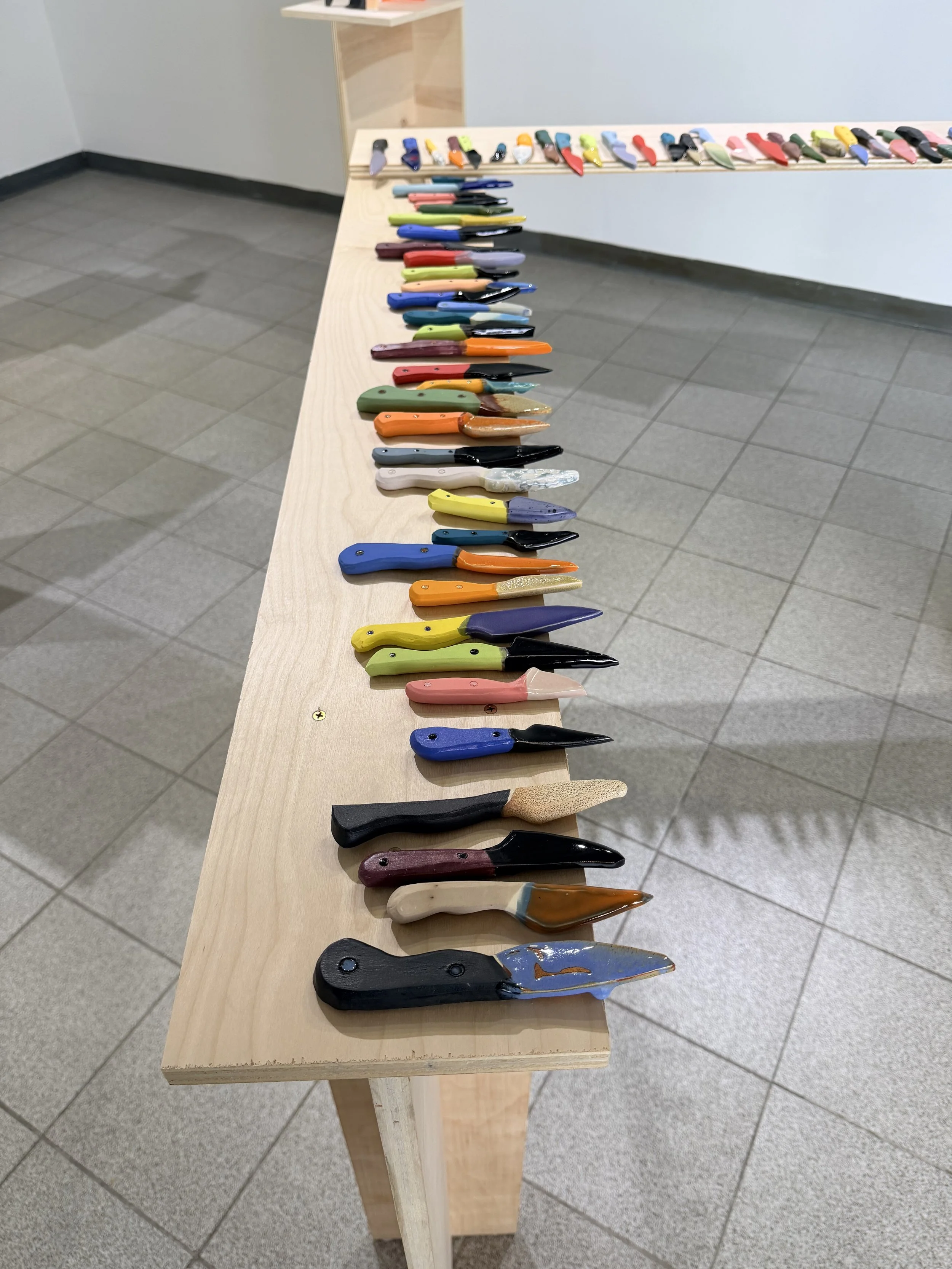
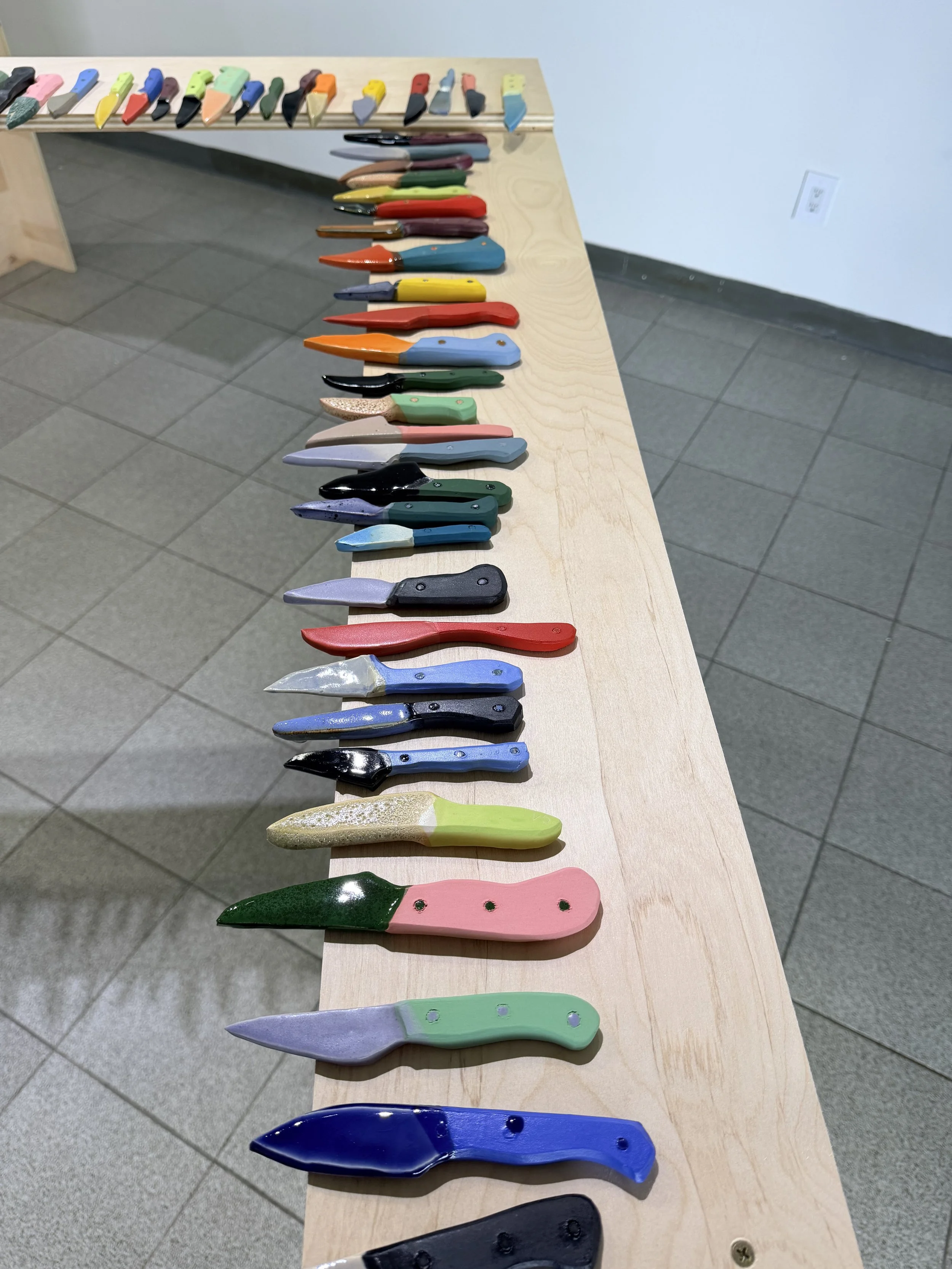
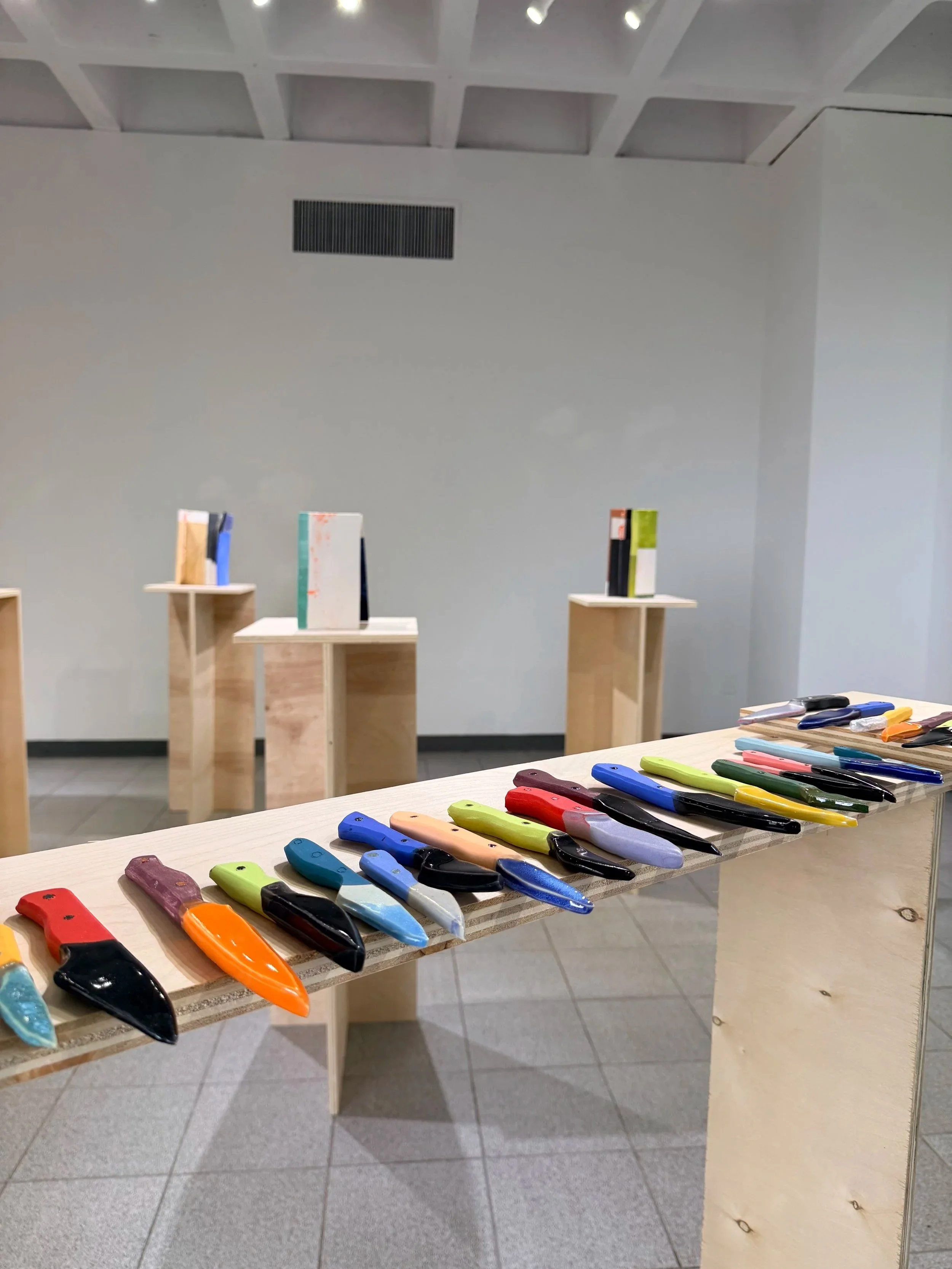
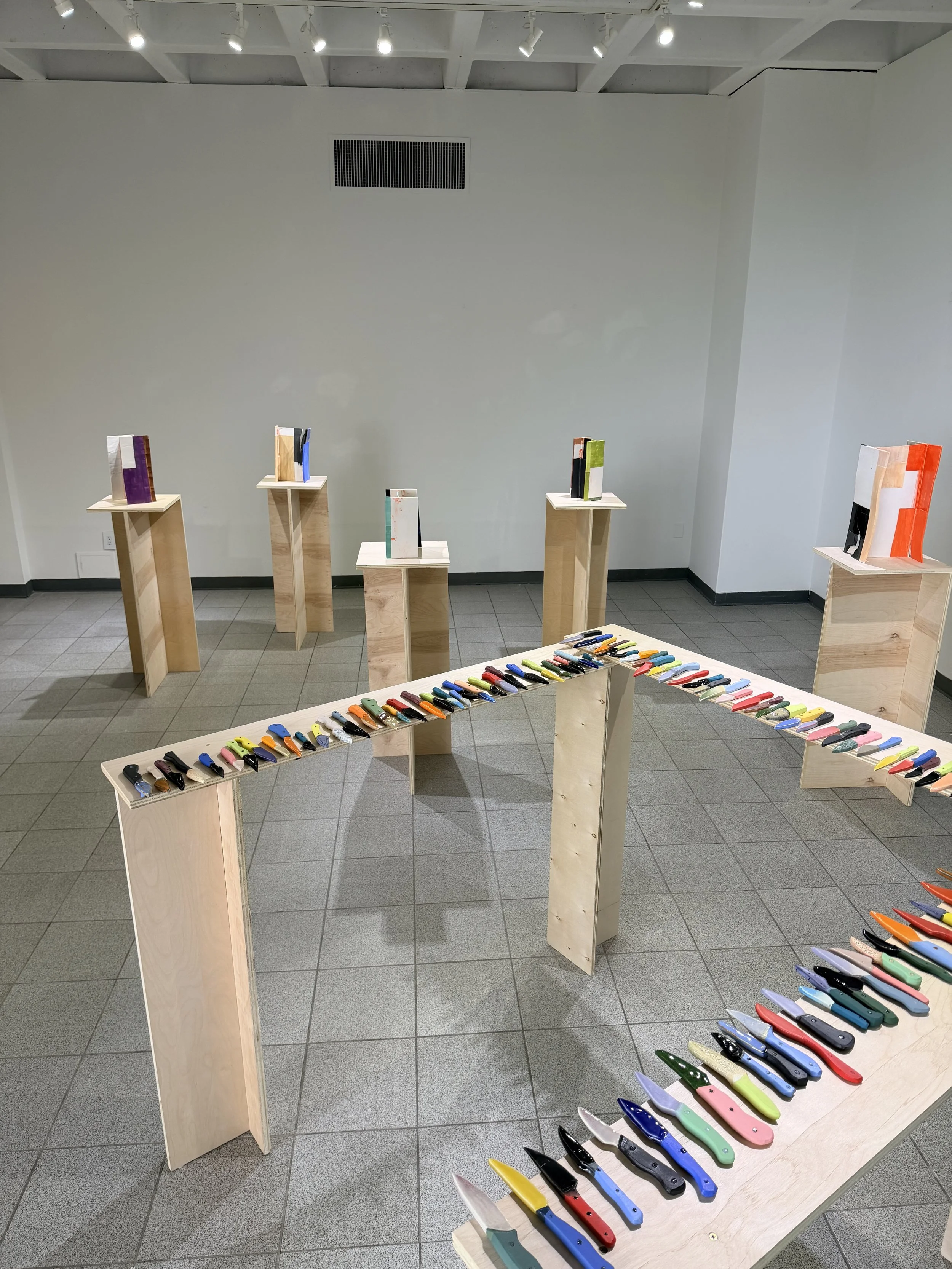
At the center of the show are two deceptively familiar forms: the I-beam and the knife, painterly glazed in rich color blocks that transform the industrial and utilitarian silhouettes. Color here is not decoration but argument, stripped of their identity and rebuilt in a medium that seems to contradict them entirely. It interrupts the reading of these forms, forcing question of their weight, threat, and authority. The result are objects that hold their shapes but question their certainties.
To take these forms and hand build them in porcelain, a material historically linked to the domestic interior, ornamentation, and delicacy, is to perform a kind of material drag. The objects retain their medium’s intent to move until vitrified resulting in warping, splitting and cracking under pressure. They pass, and they don’t. They hold their shape while everything underneath has shifted. This is not parody. It is something more precise and more destabilizing: a structural critique delivered through the logic of the object itself, using form against form, material against meaning, until the original authority of these shapes begins to look less inevitable and more contingent. Less like nature and more like a performance that has simply been running for a very long time. These are not neutral tools. They are, in the fullest sense, loaded objects: shaped by and in turn shaping the hierarchies of gender, labor, and power.
Heaviness, the exhibition suggests, is not a property of matter alone. It accrues through use, repetition, and the accumulated pressure of what an object has meant across time and culture. Is a load defined by mass, by danger, by history, and by the labor a thing represents? These are objects that have done ideological work for a very long time. A porcelain I-beam cannot hold up a building. A porcelain knife will not hold an edge. Yet both objects remain fully themselves in the imagination, still structural and still sharp. The I-beam, a symbol of the built environment and of who gets to build and who gets built around, lands differently depending on who is standing in front of it. Queer experience has always been, among other things, an education in the politics of space: in which rooms you are permitted to enter, in what posture, under what conditions. The queer body has learned, often at great cost, to move carefully through spaces built for others, is a body that learns to read threat. These sculptures understand that. They are not abstract provocations. They are objects with histories.
What Heavy Load ultimately proposes is not a theme applied to these objects from the outside but a condition already latent within them. Porcelain does not diminish these forms, it reveals the fragility that was always there, underneath the performance of permanence. The color does not decorate these objects. It refuses, on their behalf and on ours, to remain invisible. The load is heavy. The work knows this. It carries it anyway, and in doing so, makes room for everyone else who has been doing the same.